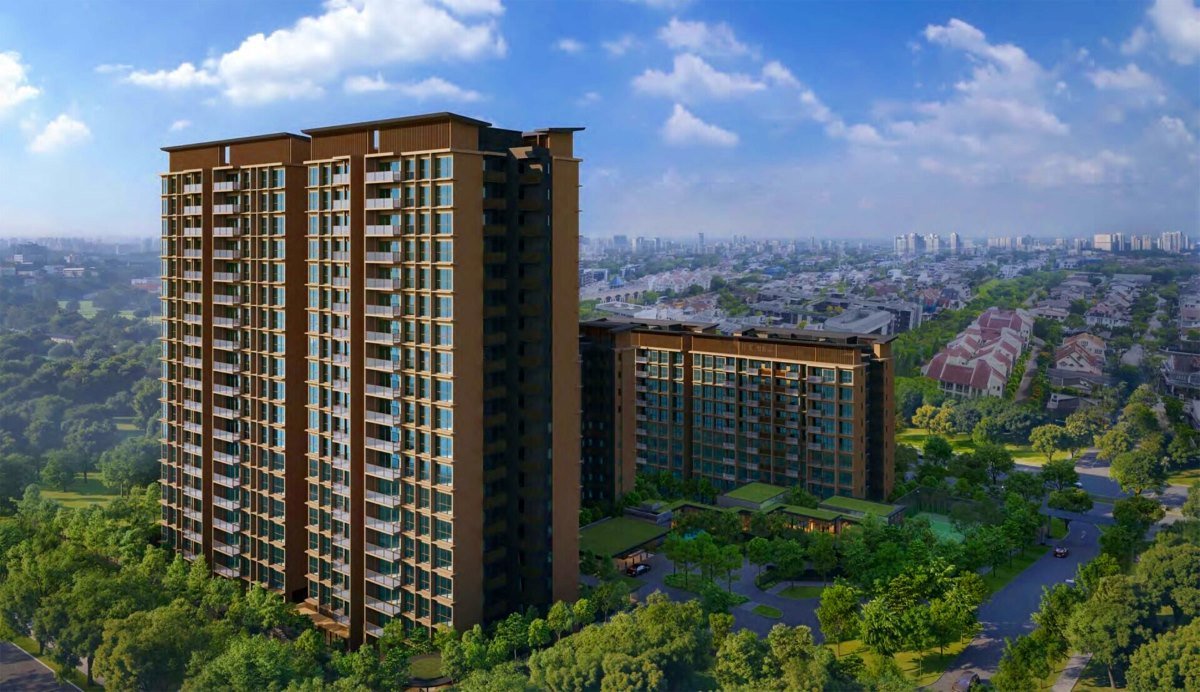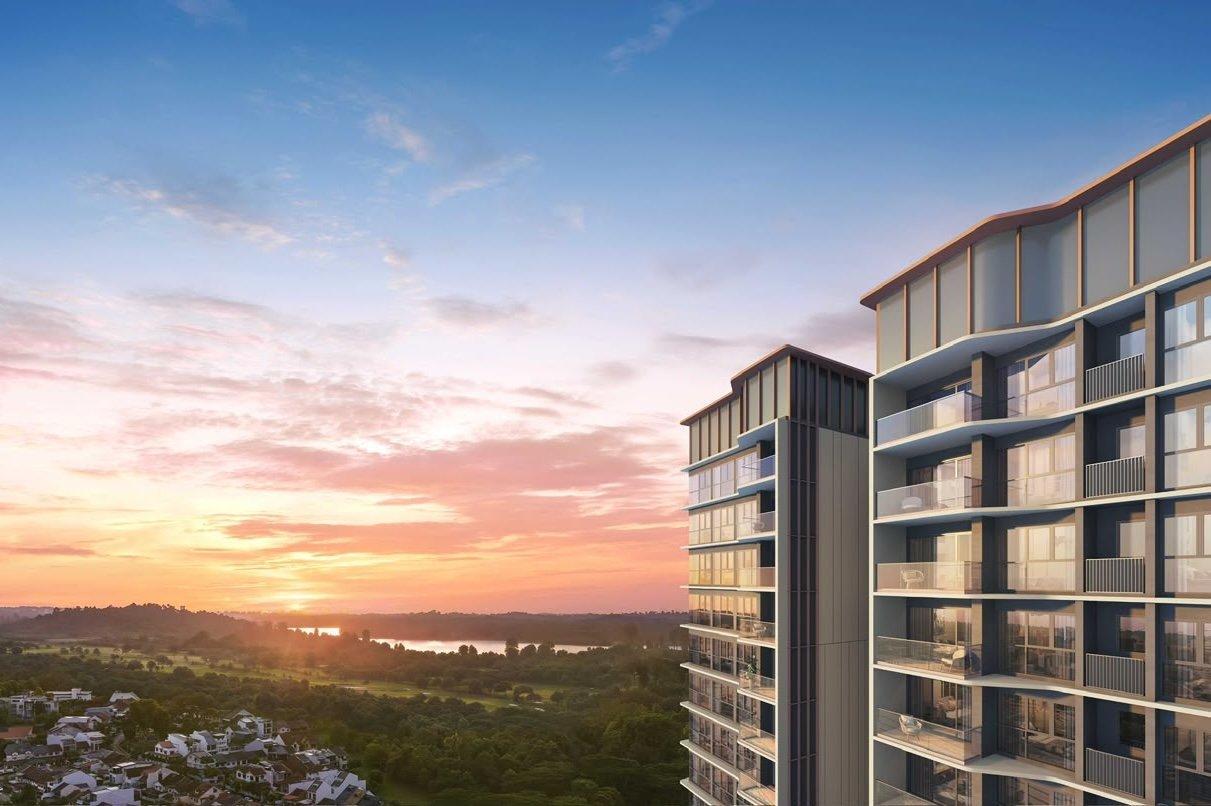
If you’ve read anything about Hudson Place Residences over the past few weeks, you’ve probably noticed the reviews all rhyme. Strong launch weekend. Reputable developers. The one-north growth story. Nice facilities. And then, right on cue, the same tidy conclusion: Hudson Place is a good buy.
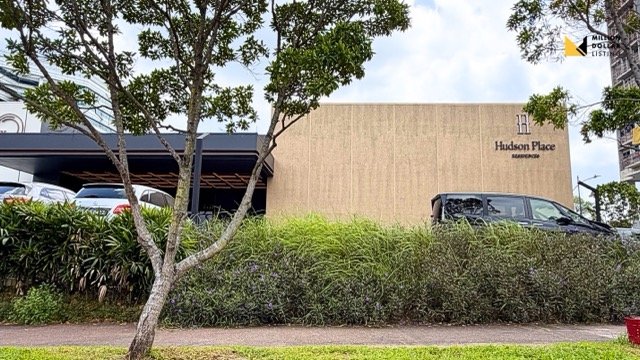
They’re probably right.
The problem is that “good” isn’t a particularly useful word when you’re about to spend $2.5 million.
Imagine you’re shopping for a car and someone tells you the BMW 5 Series is excellent. You wouldn’t immediately be like “Yes, take my money!”.
Your first question would be, “Compared to what?” Compared to a Mercedes E-Class? Compared to a two-year-old Porsche selling for roughly the same price? Compared to keeping your current car for another three years?
Expensive decisions are almost never made in isolation. They’re made by comparing alternatives.
Property should work exactly the same way.
The minute Hudson Place lands on your shortlist, the question stops being “is this a good project?” It becomes “is this a better home for my money than everything else I could realistically buy with the same budget?” That’s the comparison I think buyers should be making. And it’s the one that most reviews, oddly, skate right past.
So instead of walking you through yet another brochure (I know, we’re all sick of that), let’s start with a much simpler question.
If you had $2.5 million today, would Hudson Place be where you’d spend it?
Verdict In 60 Seconds..
My answer is yes.
Well…yes, but with an asterisk and a question mark (read: yes* (?)).
Hudson Place would absolutely make my shortlist, but I wouldn’t book a unit before looking at three other developments: Bloomsbury Residences, One-North Eden and Stirling Residences.
If, after comparing all four, Hudson Place still came out on top, I’d feel much more confident writing the cheque.
What I like most about Hudson Place isn’t that more than 60% of its units sold during launch weekend. Launch numbers are interesting, but they tell you more about market sentiment than investment quality.
That four-way comparison is the part most buyers never quite finish on their own. It’s fiddly, the numbers don’t line up neatly, and by the third showflat everything blurs together. It’s also, as it happens, exactly the kind of thing I do for a living. But we’ll get to that; for now, back to the project.
What I like most about Hudson Place isn’t that it sold 201 of its 327 units — about 61.5% — over its 16–17 May launch weekend. Launch numbers are fun to talk about, but they say more about the mood of the market than the quality of the investment.
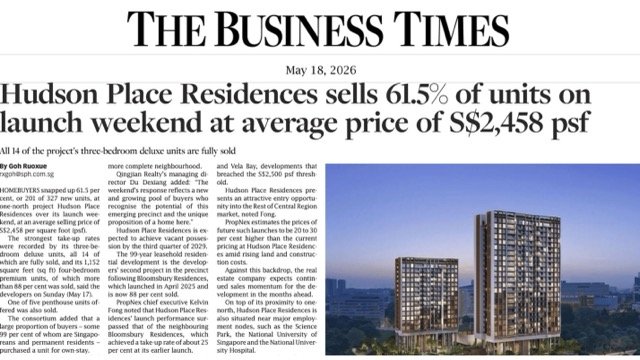
What actually made me sit up was the price. At a current selling price of $2,396 psf, Hudson Place came to market at a level that stacks up surprisingly well against recent launches in the region — several of which have already sailed past $2,500 psf.
Against that backdrop, $2,396 psf looks almost restrained. Five years ago, a number like that on a one-north launch would have sounded like a typo. That’s the first clue this project is worth a closer look.
If you’re buying to live in, and you’re happy to hold for the next eight to ten years, I think Hudson Place deserves serious thought. If your priority is rental income tomorrow morning, or you’re buying mainly because everyone in the queue looked excited, I’d pump the brakes.
(A quick reminder that a busy launch weekend is not a substitute for doing your homework.)
| Project | Hudson Place Residences |
| District | 5 |
| Units | 327 |
| Address | Media Circle |
| Tenure | 99-Year Leasehold |
| Site Area | Approximately 82,125 sqft |
| Developer | Qingjian Realty, Forsea Holdings, CYZ Land, Jianan Capital |
| Estimated T.O.P. | Est. Q3 2029 |
The Number Everyone Talked About…Wasn’t The Most Interesting One
The headlines after launch weekend all focused on the same statistic: 201 units sold.
Fair enough. It’s a good number.
But the figure I kept circling back to wasn’t how many units moved. It was the average price they moved at: $2,458 psf.
That’s the one that made me pay attention.
Singaporean buyers have been trained to think of pricing as a neat ladder — CCR on top, then RCR, then OCR. Broadly, that’s still true.
But the rungs have blurred, and the easiest way to see it is to look at what’s actually transacting. Vela Bay, an OCR project, has hit $2,886 psf. Pinery Residences — also OCR, and all the way out in Tampines — has since sold units as high as $2,728 psf.
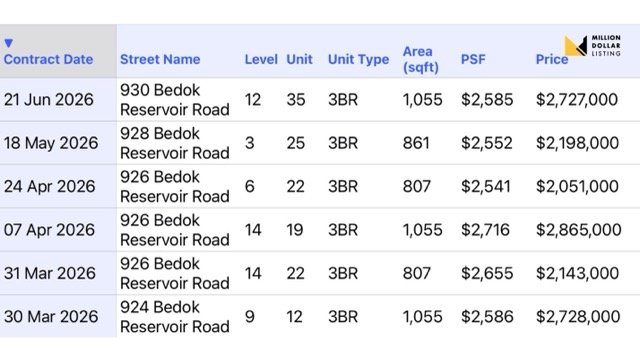
Even Penrith, nearer in by Queenstown, has gone at $2,805 psf. In other words, projects sitting on the lower rungs are now clearing numbers that would have sounded far-fetched not long ago. Which is exactly why Hudson Place made me look twice: it’s an RCR project, with a 3-bedroom premium going for around $2,396 psf, sitting quietly below OCR launches that are supposed to be cheaper than it.
On the ladder as most people picture it, that’s upside down.
There’s a specific reason Hudson Place could come in below that line, and it isn’t generosity. The developers picked up the site for roughly $1,037 psf ppr — a genuinely low land cost by today’s standards. Lower land basis means more room to price competitively, and it means buyers get a slightly bigger cushion at entry. That’s not a marketing flourish; it’s arithmetic.
To see how low that really is, look just further west. Qingjian paid around $1,556 psf ppr for the Dover plot; close to 50% more than Hudson Place’s land cost. At that land price, the estimated breakeven sits somewhere near $2,756 psf, and with the site roughly 300m from the MRT, the developer will almost certainly attach a premium when it launches.
So the same buyer who thinks Hudson Place looks fully priced today may soon be comparing it against a neighbouring project that has to come to market meaningfully higher.
And here’s the part worth sitting with: these plots share a developer. When one group controls Hudson Place, Bloomsbury and the Dover site, it isn’t simply building three projects — it’s writing its own narrative and setting the price ladder between them.
It can position Hudson Place at one level and the Dover plot at another, deliberately, so each launch makes the next look like the natural step up. Hudson’s pricing doesn’t look attractive by accident. It looks attractive because it’s the entry rung of a ladder the same developer gets to build.
Seen in that light, the more useful question isn’t whether $2,396 psf is expensive. It’s whether it’s good value next to the alternatives.
That’s a far more productive conversation than counting treadmills in the gym or admiring the clubhouse in the artist’s impressions.
The Comparison I’d Make Before Visiting Yet Another Showflat
Here’s what I think most buyers get wrong.
They tour Hudson Place, then immediately book the next new launch. Then another. By Sunday evening they’ve collected four brochures, seen four showflats, and told themselves they’ve done proper research.
I’m not sure they have.
Personally, I’d skip the second showflat and head straight for a resale viewing.
That sounds contrarian. Hear me out before you judge.
If I’ve got $2.5 million to spend, I don’t much care whether a home is brand new or five years old. I care what I’m getting for the money. Yet buyers instinctively line up new launches against other new launches, as though completed developments simply don’t exist.

The stiffest competition for Hudson Place isn’t necessarily another glossy sales gallery. It might be a finished building where someone else has already eaten the construction risk, paid for the renovation, and can hand you the keys next month.
It’s advice I give buyers constantly, and it’s almost never what they expect to hear from someone in my line of work. But steering people toward a resale when it’s the smarter buy is a large part of why they trust me with the next one.
For me, that development is One-North Eden.
Hudson Place vs One-North Eden
Two buyers. Same rough budget. Both work around one-north. Both plan to hold for ten years.
One buys Hudson Place. The other buys One-North Eden.
Three months from now, one of them has moved in, finished renovating, and — if it’s an investment — may already be banking rent. The other is refreshing the construction update page and counting down to 2029.
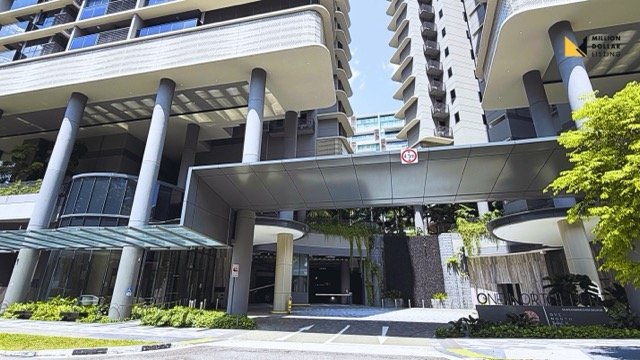
Buying Hudson Place is like pre-ordering the next iPhone. Buying One-North Eden is walking into the Apple Store and carrying one out today. Neither is wrong. You just have to decide whether the wait is worth it.
With Hudson Place, you’re paying for a neighbourhood that’s still taking shape, a building that doesn’t physically exist yet, and the bet that today’s price looks smart a decade from now.
One-North Eden is about certainty. Completed in 2024, all 165 units are there to walk through. You can check the afternoon sun, stand on the balcony, and judge the view for yourself. No imagination required. And it has a track record: as of March 2026, Propnex Research had logged 32 profitable resales at the project, with gains ranging from about $139,000 to $741,800 — and, notably, no recorded loss-making transactions yet.
That’s why I am not a fan of the argument that “new is always better”. New is simply newer. Whether it’s better depends entirely on what you’re giving up in return.
A table tells this story faster than another thousand words:
| Category | Hudson Place | One-North Eden |
|---|---|---|
| Status | New Launch (TOP 3Q 2029) | Completed 2024 |
| Units | 327 | 165 |
| Average PSF | #02-11 (Available Unit) $2,451,000 ($2,396 psf) | #05-09 (Sold in May 2026) $2,700,888 ($2,413 psf) |
| Estimated Monthly Rent | No rental income until 2029. | No 3-bedroom rental transactions at time of writing. URA recorded an average monthly rent of approximately $7,000. |
| Gross Rental Yield | Projected 3.5% based on current pricing. | 3.1% |
| Handover | 3Q 2029 | Keys Available Now |
Once the numbers sit side by side, the question changes. You stop asking whether Hudson Place is a good project and start asking whether the premium you pay today — for a home you can’t occupy for another three years — is justified by what you expect to gain by 2029. That’s a much healthier way to think about it.
Then There’s Bloomsbury.
If One-North Eden is the resale comparison I’d insist on making, Bloomsbury is the new launch I’d compare most closely.
Not ELTA.
Not because ELTA isn’t a good project, but because Bloomsbury and Hudson Place are telling almost the same story. Both sit within the Media Circle precinct, both are developed by the same consortium and both are effectively asking buyers to believe in the long-term transformation of one-north.
The biggest difference is timing.
When Bloomsbury launched in April 2025, Media Circle still felt like a rendering. Buyers had to picture what the area might become. A year on, demand has caught up: by early 2026 the 358-unit project was roughly 78–85% sold, at an average of about $2,512–$2,707 psf. Hudson Place arrives at a later, more believable chapter of the same story — the precinct is turning from masterplan into actual neighbourhood.
That reduces uncertainty. And uncertainty has a price.
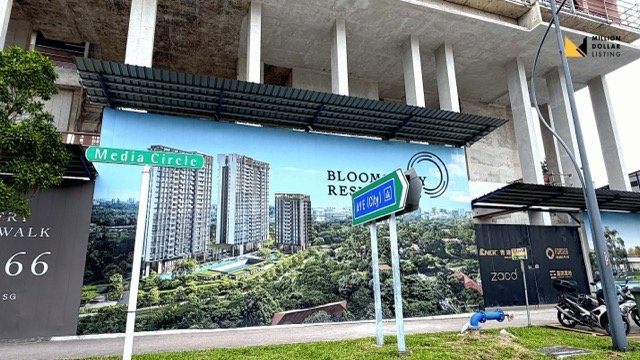
In most markets, buyers pay more once the story starts coming true. Which is exactly why Hudson Place’s pricing surprised me. Given how far confidence in one-north has grown, I half-expected it to launch more aggressively than Bloomsbury. Instead, at $2,396 psf at Hudson Place versus Bloomsbury’s current lowest price at $2,531 psf, it came out looking… sensible.
That’s not a word I use very often when talking about new launches.
I don’t mean cheap. I certainly don’t mean bargain. I mean sensibly positioned relative to what else is on the table. A property doesn’t need to be the cheapest option to represent value. It just needs to make more sense than the ones sitting next to it. And on that test, Hudson Place quietly does better than the headlines suggest.
So What Are You Really Paying For?
Something struck me at the showflat.
The gallery talks facilities. The brochure talks layouts. The location map lights up the MRT, the schools, the restaurants.
All expected. But I don’t think that’s the real product.
Strip the marketing away and Hudson Place is selling something much simpler.
It’s selling timing.
You’re buying into one-north before the story finishes. That sounds like a sales line, but I don’t mean it as one, because one-north isn’t a concept anymore; it’s a working district. It’s home to more than 400 companies and around 800 start-ups, employing roughly 50,000 knowledge workers, and it has drawn upwards of $8 billion in investment. Google’s Asia-Pacific HQ, Grab, Razer, Shopee and A*STAR all sit inside it.

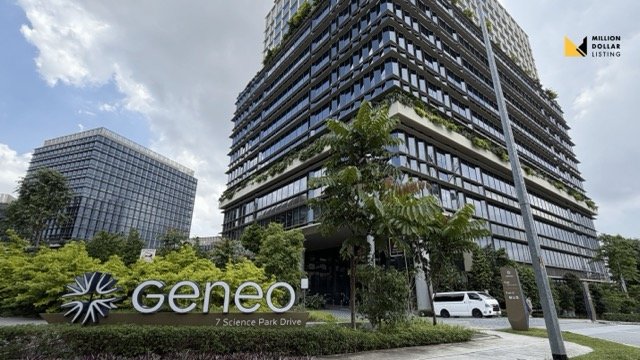
And one-north doesn’t stop at its own boundary. Right next door is Singapore Science Park, the older, larger R&D cluster that first drew the technology and research crowd to this corner of the island, and which is itself being rejuvenated into a mixed-use business hub.
It matters to Hudson Place for a very practical reason: Cintech III, one of the Science Park buildings, connects back toward Hudson Place via a direct bridge and walkway. So the employment catchment a resident can reach on foot isn’t just one-north’s 50,000 workers. It stretches into the Science Park next door. Two adjoining job hubs, one doorstep.
And it’s still growing: the Kampong AI hub announced in Budget 2026 is due to complete in 2028, and the URA’s 2025 Master Plan pencils in up to 6,000 new homes in the neighbouring Dover-Medway area.
That matters because jobs create housing demand. It’s one of the oldest rules in property, and it’s astonishing how often it gets buried under chatter about MRT exits and school rankings. People want to live near where they work — especially when the work is stable, well-paid, and clustered in one place.
That’s why the one-north story convinces me more than a District 10 postcode would. If you made me choose between a prestigious address with flat employment growth and a less glamorous one wedged beside one of Singapore’s fastest-growing job clusters, I’d take the jobs.
The postcode impresses your relatives at Chinese New Year. The jobs are what hold the price up.
But Here’s The Part Buyers Often Ignore
Every investment story sounds convincing on launch day. That’s literally the developer’s job. The real test is whether the story still holds up after the hoo-ha of launch fades.
So run the unglamorous scenario. Imagine the market goes nowhere for five years. Prices drift sideways, interest rates don’t tumble, nobody’s posting spectacular gains. In that world, would you still be comfortable owning Hudson Place?
I like that question because it drags the focus back to fundamentals. One-north isn’t valuable because it’s this season’s buzzword. It’s an established employment hub with a deepening ecosystem — 50,000 workers today, with AI and biomedical expansion still on the way. If you believe those fundamentals keep supporting demand, the investment case gets stronger. If you’re leaning entirely on a quick post-TOP price pop, you should look at the project differently.
Too often, buyers expect every new launch to deliver exceptional returns. Sometimes it does. Sometimes it doesn’t. More often than not, the projects that perform well over time are those that continue attracting people who genuinely want to live there.
Ultimately, that’s the question I’d leave you with: if the market doesn’t give you the returns you’re hoping for in the short term, are the underlying fundamentals strong enough to make you comfortable holding the property anyway?
It’s the first question I ask anyone before they commit to a launch — because if the answer is yes, everything else is upside, and if it’s no, no amount of launch-weekend excitement should talk you into it.
Three Things That Would Make Me Think Thrice About Hudson Place
Every property has weaknesses. If someone tells you a project has no downsides, they might as well wear a T-shirt that says “I am a salesperson.”
For Hudson Place, there are three things I’d pay close attention to.
The first is future supply. Media Circle is still evolving, which means more residential sites are likely to be developed over time. That’s great for creating a vibrant neighbourhood, but it also means today’s buyers will eventually compete with tomorrow’s launches. If too many similar projects enter the market within a short period, buyers will naturally have more choices.
Second, pricing. Hudson Place feels competitive now, but nothing about property is static. If later phases release meaningfully higher, or if nearby resale prices don’t keep pace, you have to keep asking the question that runs through this whole piece: is the premium still justified? The honest answer may change over time.
The third is probably the most important.
Don’t confuse a successful launch with a successful investment.

Selling more than 200 units in a weekend creates headlines, but headlines don’t pay your mortgage. Every buyer has different reasons for purchasing a property. Some are owner-occupiers. Some are investors. Some simply fell in love with the showflat.
This is the part where it probably helps to say what I actually do. Hi, I’m Elson. Advisory and research is my full-time work. I sit on the buyer’s side of the table, digging through the numbers and matching projects to people rather than people to projects.
It’s the kind of analysis this whole article is built on, and it’s exactly what I do for clients one-on-one: pressure-test a shortlist against the alternatives until we know not just whether something’s a good buy, but whether it’s the right buy for you.
Because a launch that’s right for one buyer can be quite wrong for another — the numbers only mean something once you attach them to a horizon, a budget and a reason for buying.
A strong launch tells you a project suited someone’s profile. Whether it suits yours is a different question, and it’s the one worth paying for a proper answer to.
None of those reasons have anything to do with yours.
That’s why I never like hearing someone say, “It sold well, so it must be a good buy.”
Maybe it is.
But I’d rather arrive at that conclusion myself.
So…Where Does That Leave Hudson Place?
If you’ve been waiting for a clean “buy” or “skip,” I’m going to disappoint you. I don’t think property decisions are that binary.
After lining Hudson Place up against its neighbours, I don’t think it’s obviously better than everything else out there. I also don’t think you should wave it away just because resale options exist.
It sits somewhere more interesting than either.
If you believe one-north still has room to run, you’re comfortable waiting until 2029, and you’re in it for the long haul, Hudson Place makes a genuinely compelling case — helped by a lower land cost, a launch price that undercuts several nearby projects, and an employment story with real numbers behind it.
If immediate rental income matters more, or you’re finding completed homes like One-North Eden (keys today, 3% rental yield, a clean resale record) or Stirling Residences (completed in 2022, a 883 sqft 3 bedder has sold for $2,350,000 in June 2026) at similar money, spend more time on those before you decide.
In other words, Hudson Place isn’t a project that sells itself. It’s a project that rewards comparison. And that might be the biggest compliment I can pay it.
The more I compared it, the more interesting it got. Not because it won every matchup, but because it held its own in almost all of them.
Not Sure Which Project Makes The Most Sense For You?
That’s perfectly normal. Most buyers aren’t choosing between buying and not buying. They’re choosing between several good projects, all with different strengths and trade-offs.
If you’d like a second opinion, I’d be happy to walk you through the options. We’ll compare Hudson Place with nearby launches and resale developments, discuss the numbers, and figure out which project best matches your priorities.
At the end of the conversation, you might decide Hudson Place is the right choice.
Or, you might decide another project suits you better.
Either way, you’ll know why.
Elson Koo is a property advisor who’d rather talk you out of a bad buy than into a good-sounding one.
*Disclaimer, all prices are accurate at time of writing. Prices may change without prior notice.