
BUYING
Every project you’re shown is “a good buy.” Compared to what?
THE TWO WAYS BUYERS LOSE MONEY HERE
ONE
Overpaying against the project’s own record. Not against the district – against what that stack, that unit type has actually transacted at. Sellers price on hope. The record is less generous, but alot more useful.
TWO
Buying into a buyer pool that isn’t there. Marina One sits on three MRT lines in the CBD and has been among the worst among loss-making resales. No primary school withing a kilometre – so families, the deepest pool in Singapore never consider it.
You aren’t only buying a home. You’re buying the size of the queue that will one day want it from you.
To the completed development two streets away with a bigger layout and a finished renovation. To the next launch in the same precinct, eight months out. To not buying at all. I put your shortlist against the alternatives it should have been measured against.
Free consultation. If nothing on the market fits your brief, I will say so.
THE TWO WAYS BUYERS LOSE MONEY HERE
ONE
Overpaying against the project’s own record. Not against the district – against what that stack, that unit type has actually transacted at. Sellers price on hope. The record is less generous, but alot more useful.
TWO
Buying into a buyer pool that isn’t there.
It is easy to buy in. It is much harder to get out when there is no ready pool of future buyers behind you. And the risk is higher still in a project where a high number of units have already been resold at a loss.
You aren’t only buying a home. You’re buying the size of the queue that will one day want it from you.
THE COMPARISON EVERYONE WANTS
New launch or resale is the second question.
Neither one is automatically better value. It depends entirely on how long you’ll hold it and what you need it to do.
| New launch | Resale | |
|---|---|---|
| Entry price | Developer-set, usually a premium to nearby resale | Negotiable against a visible transaction record |
| What you verify | Floor plans, a model, a showflat — the building doesn’t exist yet | The actual unit, the actual light, the actual neighbours |
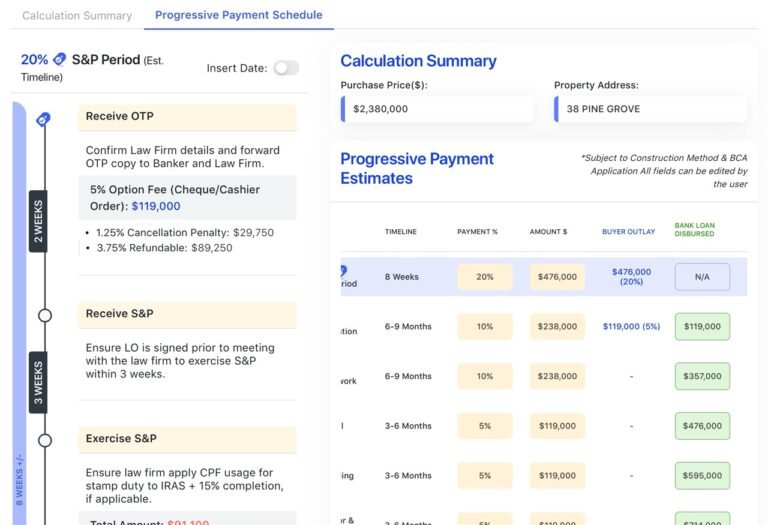
| Timeline | Typically 3–5 years to completion | Move in or rent out within weeks |
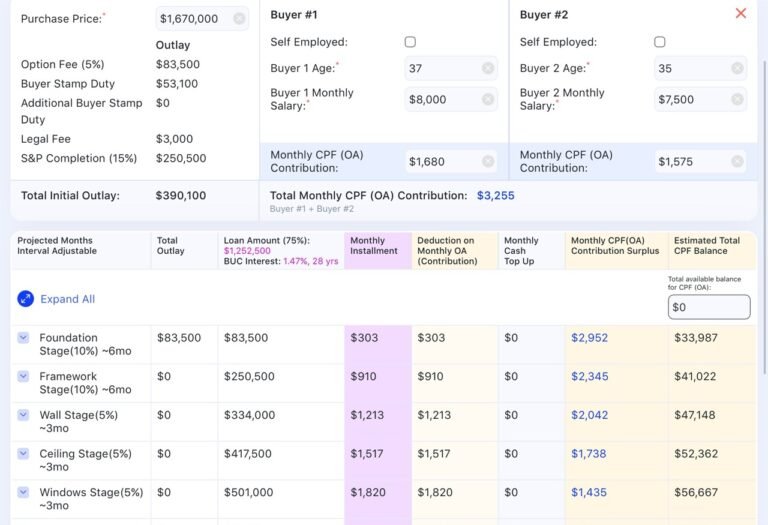
| Cash flow | Progressive payments, no rent until completion | Rental income can begin almost immediately |
| Layout | Post-harmonisation — usually more usable space per square foot | Older layouts may pay full PSF for balconies and bay windows |
| Price risk | Exit depends on a market three to five years out | Downside is visible in the project’s own history |
| Suits | Longer horizons, buyers who can wait for the newest stock | Buyers needing certainty, space now, or immediate yield |
WHY I DON’T TRUST POSTCODES
A great address isn’t the same as the right property.
These four projects come from my own published research, pulled from public transaction records. Each had a prime location, and each still lost owners money. So I don’t start with the postcode. I start with the project’s record.
| Project | What the record shows | Why it happened |
|---|---|---|
| OUE Twin Peaks, Leonie Hill Road | 27 losses, 0 profits in one year | Walking distance to Orchard MRT — and a 99-year lease ringed by freehold competitors, sold largely to investors with no reason to hold. |
| Peak @ Cairnhill 1, Cairnhill Circle | −4% to −5% annualised | Freehold, prime, and still several hundred thousand down after a decade. Freehold is a long-term advantage, not a force field. |
| Marina One Residences, Marina Way | 44+ losses in one year | Three MRT lines on foot — and not one primary school within a kilometre, so families quietly cross it off the list. |
| Reflections at Keppel Bay | $3.7m in 2012 resold at $2.78m | A Libeskind waterfront landmark. An architect’s signature is not a pricing strategy. |
Before a property makes your shortlist, I check what the project has actually transacted at, who the next buyer will be, and whether the layout, lease and price still work for how long you plan to hold.
| Project | What the record shows | Why it happened |
|---|---|---|
| OUE Twin Peaks, Leonie Hill Road | 27 losses, 0 profits in one year | Walking distance to Orchard MRT — and a 99-year lease ringed by freehold competitors, sold largely to investors with no reason to hold. |
| Peak @ Cairnhill 1, Cairnhill Circle | −4% to −5% annualised | Freehold, prime, and still several hundred thousand down after a decade. Freehold is a long-term advantage, not a force field. |
| Marina One Residences, Marina Way | 44+ losses in one year | Three MRT lines on foot — and not one primary school within a kilometre, so families quietly cross it off the list. |
| Reflections at Keppel Bay | $3.7m in 2012 resold at $2.78m | A Libeskind waterfront landmark. An architect’s signature is not a pricing strategy. |
HOW THE CONSULTATION WORKS
Eight stages. You won’t see a listing until stage four.
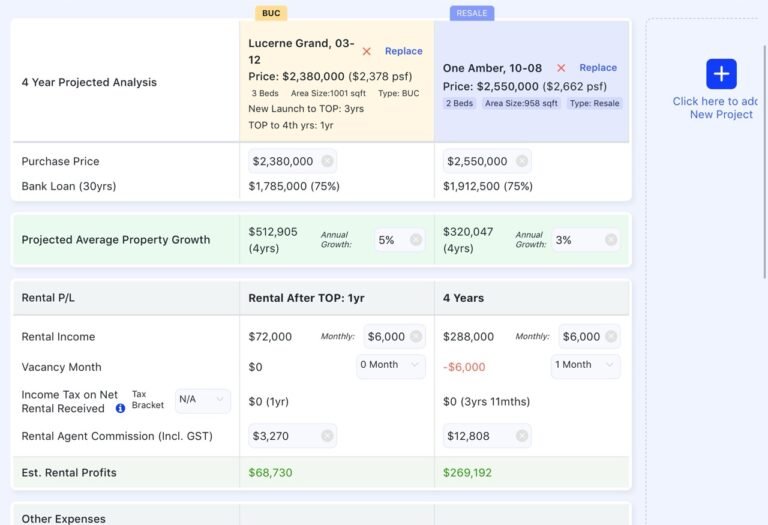
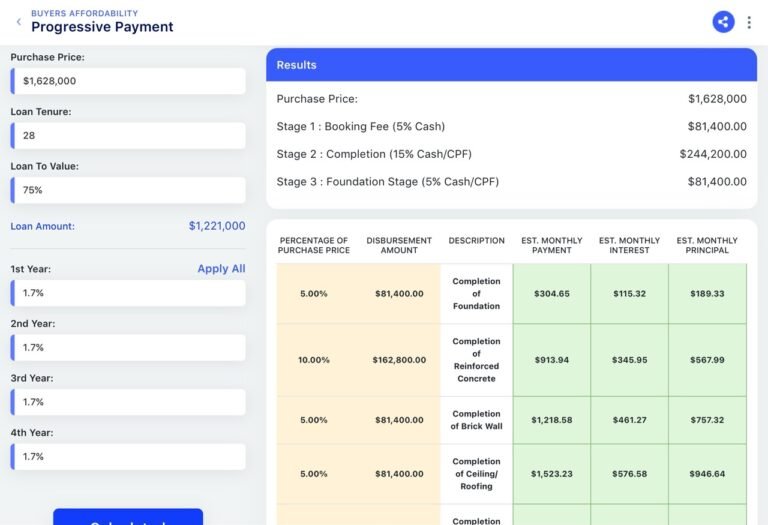
01
Define the decision — why you’re buying, and which constraints can’t move. Home, investment or both lead to different properties.
02
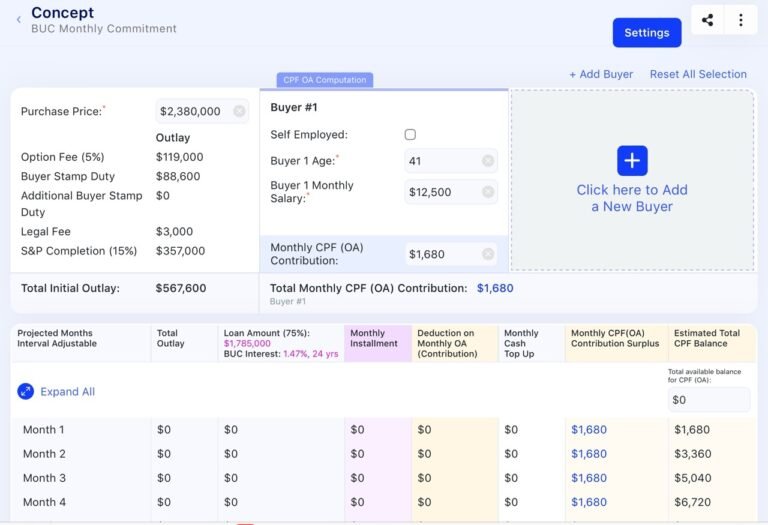
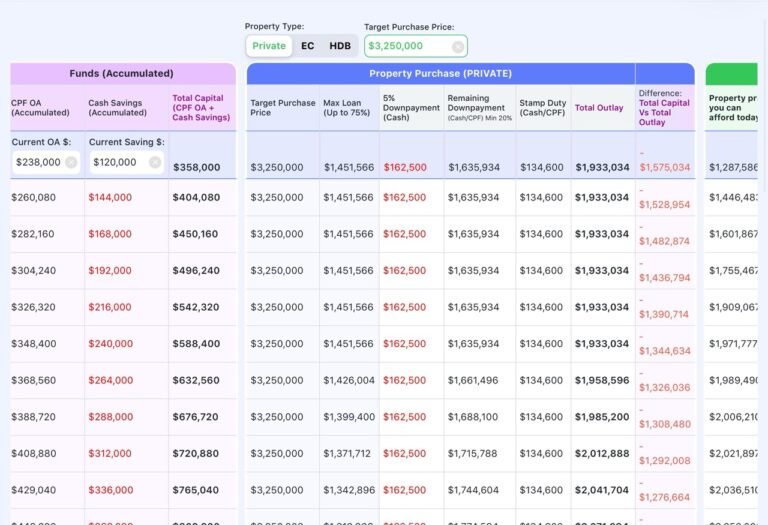
Financial guardrails — your comfortable range rather than your maximum, upfront cash and CPF, and the ABSD, SSD and TDSR arithmetic before it becomes a surprise.
03
Read the market around your brief — prices, unsold supply, absorption, rental evidence, and the launches and completions coming in your precinct.
04
Build a cross-market shortlist — new launch and resale together wherever both are realistic. Not a developer’s schedule, and not whatever I happen to be marketing that month.
05
Compare properly — entry price, tenure, layout efficiency, timing, yield and likely exit audience, the same terms applied to every option.
06
Test it in real life — viewings with specific questions to settle, including the 7.45am walk to the MRT rather than the one on the map.
07
Pressure-test the choice — what if prices move sideways for three years, rent comes in 15% under, or you need to exit in year four into Seller’s Stamp Duty?
08
Negotiate and execute — offer strategy or unit selection, then coordination through to completion, including sequencing if you’re selling first.
You aren’t only buying a home. You’re buying the size of the queue that will one day want it from you.
DATA-LED, NOT DATA-BLINDED
What I run your shortlist against
- PropNex Research market data and trend analysis
- Public transaction and rental records, by project and unit type
- Unsold supply and absorption rates in the precinct
- Launches and completions that will compete for your exit
- Project-level performance through the current cycle, not the last one
Where the data stops
A project can look excellent on every chart and still be wrong for you. A unit can look expensive
per square foot and still be better value, because the layout works and the renovation is done.
Data narrows the field and surfaces the risk. Conversation and viewings work out which trade-
offs you’ll be happy living with for a decade.
Analytics with no judgment is just a spreadsheet nobody can live in.
STRAIGHT ANSWERS
Questions buyers actually ask
Do you just push whatever new launch you’re marketing?
No. We run new launch, resale and sub-sale against the same brief and show you all three. If the answer is a five-year-old resale unit we don’t represent, that’s the answer — and you’ll see the transactions that made it the answer.
Who pays the agent when I am the buyer?
On a new launch the developer pays the agent, and for a resale property, the seller pays too. It’s worth asking of anyone advising you, because an adviser paid one way on one option and a different way on the other needs to be able to show you why the recommendation isn’t simply following the fee. The recommendation should arrive with the transactions that support it.
New launch or resale — which is better?
That’s the wrong question, and it’s the one most people arrive with. The right one is which is better for your holding period, your financing and your exit. A new launch you’ll sell in year four and a resale you’ll hold for fifteen aren’t the same decision, and the two options diverge sharply once you put a date on it.
Is a new launch price negotiable?
Rarely the headline price. Developers price unit by unit and manage the release in phases. What moves is which units are released, in what order, and which phase you commit in. Understanding the release pattern is worth considerably more than asking for a discount.
I already have a project in mind. Is that a problem?
It’s a useful starting point. We test it against your brief and against the strongest realistic alternatives. You either confirm it with reasons you can articulate, or you find something that fits better. Both outcomes justify the hour.
How much can I actually afford to borrow?
We work backwards from what you can borrow and comfortably hold, not from what you could be approved for on paper. Total debt servicing is capped as a share of income, but the number worth planning around is the one that still works if rates move and one income pauses for six months.
I already own a property, or I am not a citizen. What changes?
The stamp duty you pay turns on residency and on how many residential properties you already hold — and the order in which you buy and sell can change the figure materially. Remission windows and wait-out periods reward sequencing and punish improvisation. We map that sequence before you fall in love with a unit, while changing it is still free.
Will you tell me not to buy?
If the evidence says so, yes. We’ve told buyers to wait, and owners their number was wrong. It makes for a shorter conversation and, oddly, a better business — the people I’ve said no to are the ones who come back.
Can I buy and sell at the same time?
Yes, and as a buyer the pressure point sits in a different place: buy first and you may carry additional stamp duty and two loans; sell first and you may be renting through the search. We model both sequences with your actual numbers so you choose which cost you would rather carry, deliberately.
BEFORE THE NEXT SHOWFLAT
Get the shortlist before you get the sales pitch.
Free consultation. No obligation. If nothing fits your brief, I will say so.